


Chocolate, Slimness and Health
Chocolate is recommended for health, is it forslimness? What kindof chocolate should I prefer, dark or milk? Can we bedrugged to chocolate?
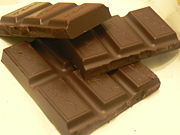
This study will answer these questions. But above all, if you careabout slimness you will seek to reduce the proportion of sugar against cocoain the choice of a product. Although cocoa is fat, it contains fattyacids beneficial to health.
History
Chocolate was bring to Europe by Cortes who introduced the king ofSpain a exotic drink, the Xocolatl. The original name is verycontroversial (chocolatl, chicolatl) butno doubt that the Spaniardsfound chocolate in the Aztec culture.
Cocoa beans are harvested in Central America since at least 1100 years BC.
Beans were erased to produce a powder and used as a drink flavored with vanilla, or with pepper or other spices.
Production
It begins always the same way but then is diversified to produce different chocolates with also very different nutritional qualities.
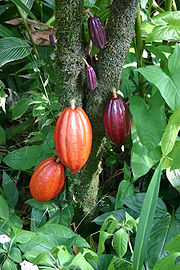
- Beans are extracted from the pods of cocoa.
- Fermentation develops aromas.
- Beans are then crushed.
- Roasting at 140 ° releasesaroma.
- Powder is turnedinto liquid pulp.
- The cocoa butter is separated from the body by pressure.
- The cocoa butter may be added then or not, depending on the type of chocolate.
- For dark chocolate, sugar is added in varying proportions, with cocoa butter.
- For milk chocolate,a part of sugar is relpalced by milk.
- White chocolate contains no cocoa but only milk and cocoa butter. Its properties to health are reduced.
- A conching phase improves the taste:chocolate is warmed 12 hours at 70°.
- Tempering follows conching. It improves the retentionperiod by amending the state of crystalline compounds ofcocoa butter.
Cocoa butter can be replacedbyother vegetable fats, with an effect on health that is negative. Toprevent them, you must refer to the label of traditional quality.
Compounds of cocoa
Apart from the sugar that addedis in chocolate, cocoa and morespecifically the cocoa butter has many rather beneficial compounds.
- Stearic acid. A saturated fatty acid but which does not increase bad cholesterol.
- Oleic acid. Fatty unsaturated acid.
- Phenylpropanoid acid.
- Theobromine(2%)
Alkaloid methylxanthine. It stimulates the nervous system and has a mild but durable euphoric effect .
It also has an effect against cough (it acts on the vagus nerve).
It could have a mutagenic effect and therefore carcinogenicon the prostate. - Flavonoids.
Catechin (or catechol or epicatechin) is a powerfulantioxidant. Found in tea and grapes as well. Flavonoids areanti-inflammatory. - Phenylethylamine (0.05 micrograms)
Neuro-transmitter, only a tiny part is still used by the body. - Tryptophan.
The amino acid precursor of serotonin, the hormone of sleep. - Caffeine. Very low dose.
- Anandamide.
Cannabinoid neurotransmitter close cannabis but in low quantities. - Magnesium. High rate.
- Phosphorus.
- Iron.
- Vitamins A, B1, D, E.
Chocolate also contains lead, but in sufficiently small quantities to be eliminated by the body.
Benefits of chocolate for health
They have been established by numerous scientific studies.
- Cocoa helps cure diarrhea. It is used for this purpose in old American medicine by plants.
- They also used chocolate paste for the stomach and against colds, coughs.
- Dark chocolate is good for blood circulation.
- It is anti-inflammatory.
- It reduces tension.
- It is anti-depressant.
- It is anti-caries: its compounds partially reduce the effect of sugar.
- Promotes healing.
- Effect against stomach ulcers.
- It has a low glycemic index (65).
A significant consumption of chocolate does not promote atherosclerosis.
The studies did not confirm the popular belief that chocolatepromotes acne. But this effect can be linked to the consumption ofsugars.
Is chocolatea drug?
Some compounds could promote a slight addiction, rather than anactual addiction. In fact he has a small and lasting euphoria effect, and thisadded to the pleasure of taste when it is good is incentive forconsumption.
One can say that it stimulates the appetite without causing more addictionthancheese.
Conclusion
Dark chocolate is most useful to health whilemilkchocolate loses much of the benefits. In addition, the percentage ofsugar also significantly alters its qualities.
Dark chocolate with 70% cocoa andcocoa butter added (with label) isthe only one who really contributes to health. Except if quantities are consumed butan excessive intake of sugar and fat would be a factor inobesity although its fatty acids are not harmful.
Note that weshould not give chocolate to animals, because their metabolism can not eliminate theobromine.
References